
Portland Japanese Garden Summer Guide 2026: Must-See Spots, Seasonal Blooms, and Insider Tips for Your Visit
The Portland Japanese Garden transforms into something truly special during summer, when long days and warm weather make it one of the most peaceful and beautiful places to visit in Portland. Nestled in the west hills of Washington Park, this 12 acre sanctuary offers stunning views of Mount Hood on clear days, along with meticulously designed landscapes that transport you straight to Japan. Summer brings the garden to life with lush greenery, blooming plants, and extended hours that let you experience the space from morning to evening. Whether you're interested in traditional tea ceremonies, photography at the iconic Moon Bridge, or simply finding a quiet moment among the ponds and pathways, the garden offers both contemplative spaces and engaging cultural experiences. Best Time to Visit: Weekday Early Morning

Summer mornings at Portland Japanese Garden offer something truly special. Visiting mid-week during morning hours transforms your experience entirely, allowing you to walk through serene pathways with only the sound of water features and birdsong accompanying your steps. This amazing sanctuary opens at 10 AM, and arriving right when the doors open gives you the best opportunity for solitude. Wednesday and Thursday mornings tend to be the quietest, while Friday begins to see a slight uptick in visitors. Note that the garden is closed on Tuesdays as of 2026.
Morning light filters softly through the maple trees, creating gentle shadows across stone lanterns and pond surfaces. The air feels fresher, temperatures remain comfortable, and the entire garden carries a calm, unhurried atmosphere that disappears later in the day.
Planning a two to three hour visit lets you explore without rushing while avoiding peak heat and crowds. Early visits also give you first access to the Cultural Village, where exhibition galleries and classroom spaces showcase Japanese art and culture without the pressure of large groups.
Photography enthusiasts will find morning light ideal. The sunlight on a beautiful day creates depth and dimension of the landscape and popular spots like the Moon Bridge are far easier to capture without crowds. The Umami Cafe is definitely a quiet place to start your visit with tea while overlooking the grounds.
Each garden reveals something different in the morning. The Strolling Pond Garden glows as sunlight reflects across the water. The Sand and Stone Garden becomes a true meditation space when experienced in silence. The Natural Garden offers opportunities to spot birds and wildlife before crowds arrive. Summer mornings sometimes bring light fog to the west hills, creating an almost ethereal atmosphere with mist drifting through the trees. Combined with cooler temperatures and quiet surroundings, this is when the garden feels most immersive and restorative.
Also make sure to explore the Strolling Pond Garden Loop. This part of the Japanese garden becomes especially magical in the early morning hours. Designed in the style of 17th-century Edo-period strolling gardens, this space unfolds as a narrative journey, revealing new perspectives with each step.
The Japanese garden features upper and lower ponds connected by a flowing stream, symbolizing a journey from the celestial to the earthly realm. This deeper meaning adds a layer of reflection as you move through the space. Begin at the Upper Pond, where the iconic Moon Bridge creates a perfect reflection in still water, forming a complete circle that symbolizes enlightenment. Early morning light makes this one of the most striking photography locations in the garden.
As you continue, Heavenly Falls cascades over natural rock, adding a soothing soundtrack to your walk. The lower pond offers a different atmosphere, where the zig-zag bridge (yatsuhashi) winds through beds of Japanese iris. This bridge design slows your pace and encourages mindfulness. Traditionally, its changing angles help visitors leave behind distractions and become more present. Walking it naturally shifts your attention to each step and surrounding detail. In summer, the iris beds bloom in vibrant purples, contrasting beautifully with green foliage and dark water. Koi fish become active as the sun warms the ponds, creating gentle ripples that catch the light.
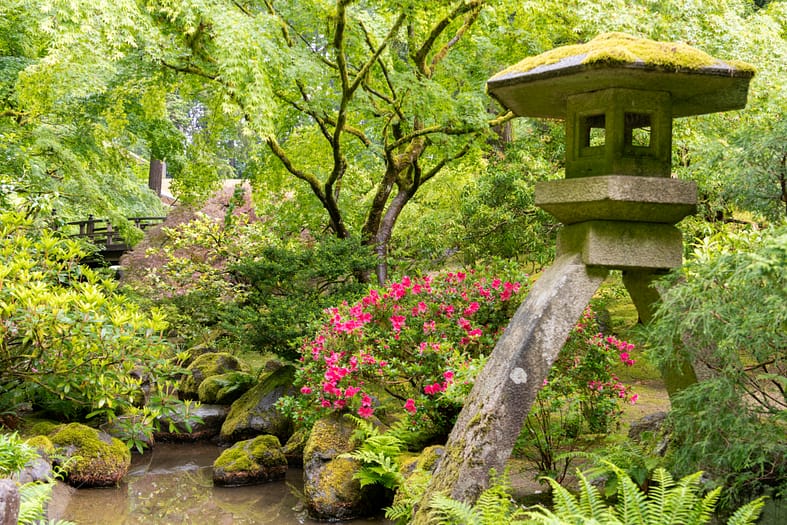
What separates the Japanese garden from most is how it engages all your senses. You’ll hear birdsong and flowing water, smell damp earth and flowers, and feel cool air near shaded areas and waterfalls. Carefully placed stones, lanterns, and pruned trees guide your experience while framing specific views. The full loop takes about 20–30 minutes at a steady pace, but plan for at least an hour to fully experience it. Benches along the way offer spots to pause, reflect, or take photos. The principle of “hide and reveal” keeps the journey dynamic, with features appearing and disappearing as you move. Light shifts constantly, transforming the same view from shadowed and mysterious to bright and open within minutes.
Photographers will find endless opportunities here, from mirror like reflections in still water to impressionistic ripples when breezes pass through, early light, longer exposures, and thoughtful positioning relative to the sun can dramatically change your results.The Cultural Village also offers a unique opportunity to experience Chadō, or “The Way of Tea” in an authentic and accessible setting. These demonstrations take place at the Cathy Rudd Cultural Corner inside the Jordan Schnitzer Japanese Arts Learning Center.
Free public tea demonstrations typically run from 1:15 pm to 2:15 pm, making them an ideal midday experience after a morning exploring the grounds. Watching a tea ceremony unfold is mesmerizing. Every movement carries meaning, from the preparation of matcha to the precise handling of utensils. The practice reflects discipline, intention, and centuries of tradition.
The four principles of teawa (harmony), kei (respect), sei (purity), and jaku (tranquility)a re echoed throughout the garden itself. Understanding these ideas deepens your appreciation for the landscapes around you, revealing how cultural philosophy and physical design are closely connected.
The Cultural Village enhances this experience by blending traditional aesthetics with a modern learning environment. Knowledgeable instructors explain both the technical steps and the philosophical meaning behind the ceremony, making it approachable for first-time visitors while still meaningful for those familiar with Japanese culture. You can move easily between indoor demonstrations and the outdoor garden, immediately seeing how the principles of tea manifest in the natural surroundings. Together, the garden and tea ceremony create a complete experience that combines beauty, mindfulness, and cultural insight in a way that stays with you long after your visit ends.
Curious? Find out more! https://japanesegarden.org/
Pedal through Portland’s best bars, from neon dives to local favorites, with good drinks, big laughs, and party vibes.
For flavor-chasers and vibe-seekers: creative drinks, TikTok-famous spots, and backdrops that bring your crew’s aesthetic to life.
Cruise through Southeast Portland’s hoppiest spots, IPAs, lagers, sours, and all the pours that make this city beer-famous.
From still to shaker: two distilleries, one cocktail bar, and a tour that shows off Portland at its best.


.jpg)


